


Research on
National Budget Priorities
& Household Finances
03/11/2026
Author: Naomi
Ahead of Budget 2027, we asked residents of Malta how last year’s Budget affected their household finances, what they want prioritised next, and how well their households are coping. Most households are managing, but the margin narrows quickly for those under strain.
The latest instalment in the MAS Public Opinion Survey programme surveyed 362 residents of Malta aged 16+ online, between 18 September and 11 October 2026. Fieldwork closed two weeks before Budget 2027 was presented. The study covers the National Budget, saving and financial resilience, attitudes to money, and financial guidance.
Last Year’s Budget Went Largely Unnoticed
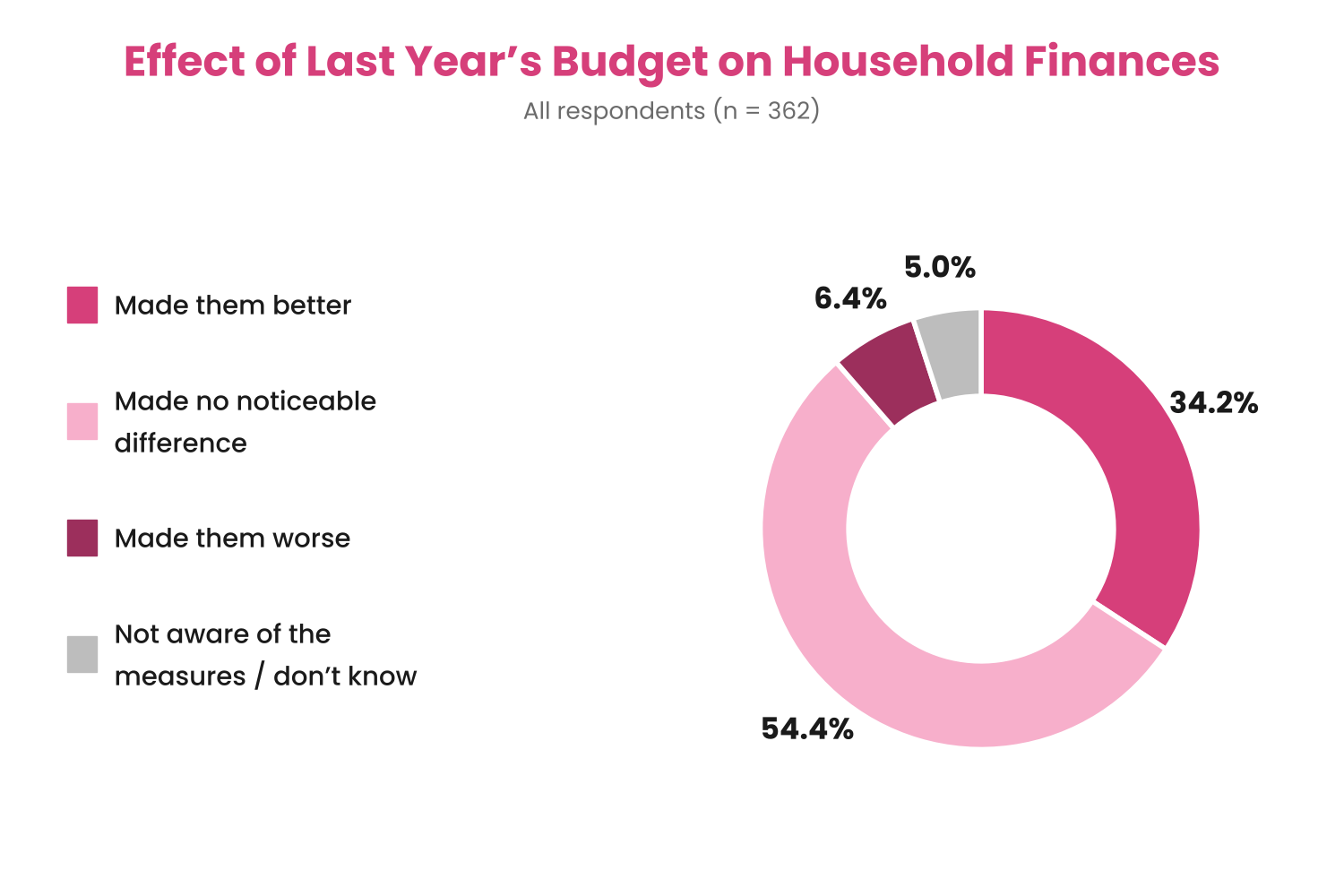
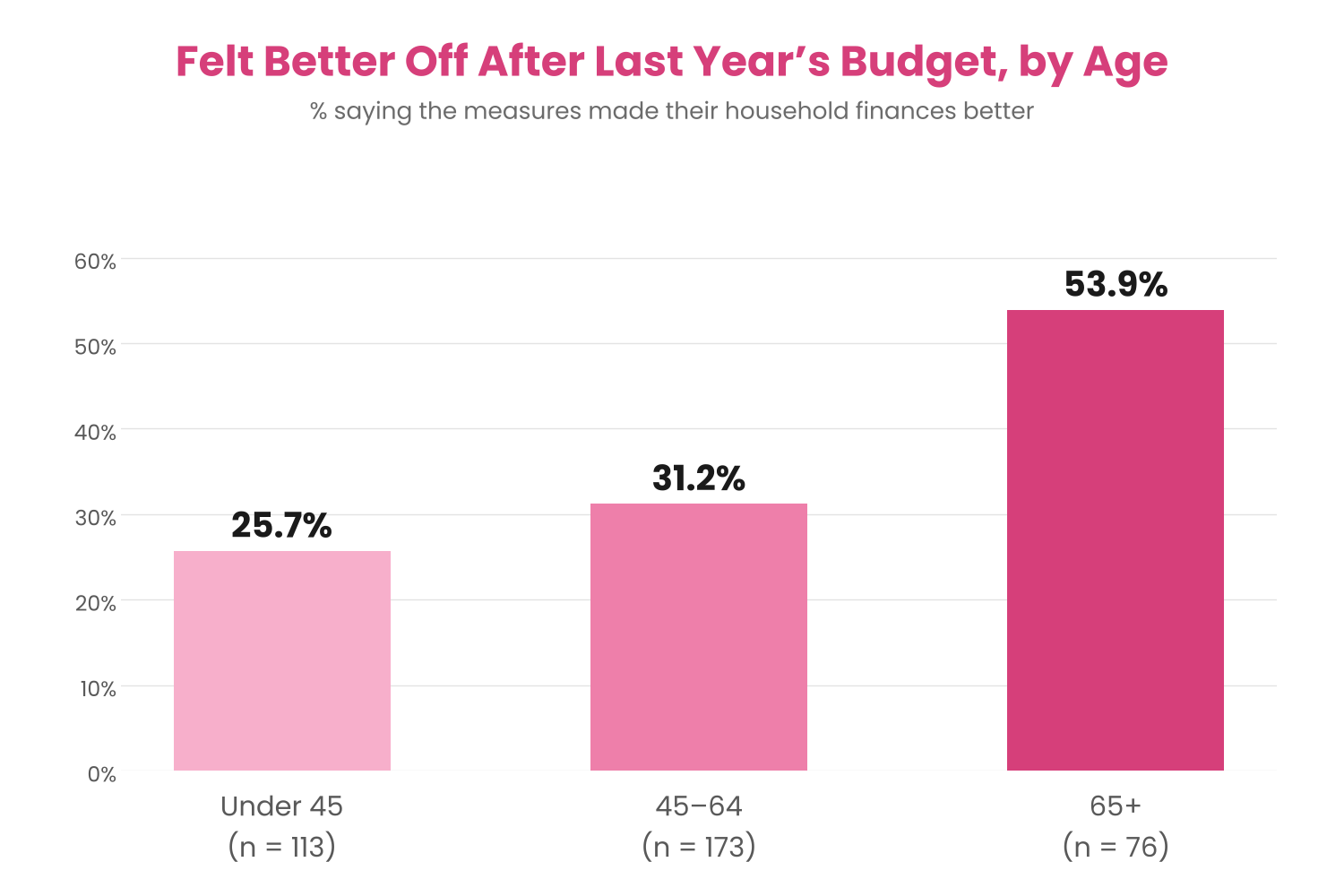
More than half (54.4%) say last year’s Budget measures made no noticeable difference to their household finances. 34.2% felt better off and 6.4% worse off. Perceived benefit rose with age: 53.9% of those aged 65 and over felt better off, compared with 25.7% of those under 45.
The Cost of Living Tops Budget Priorities
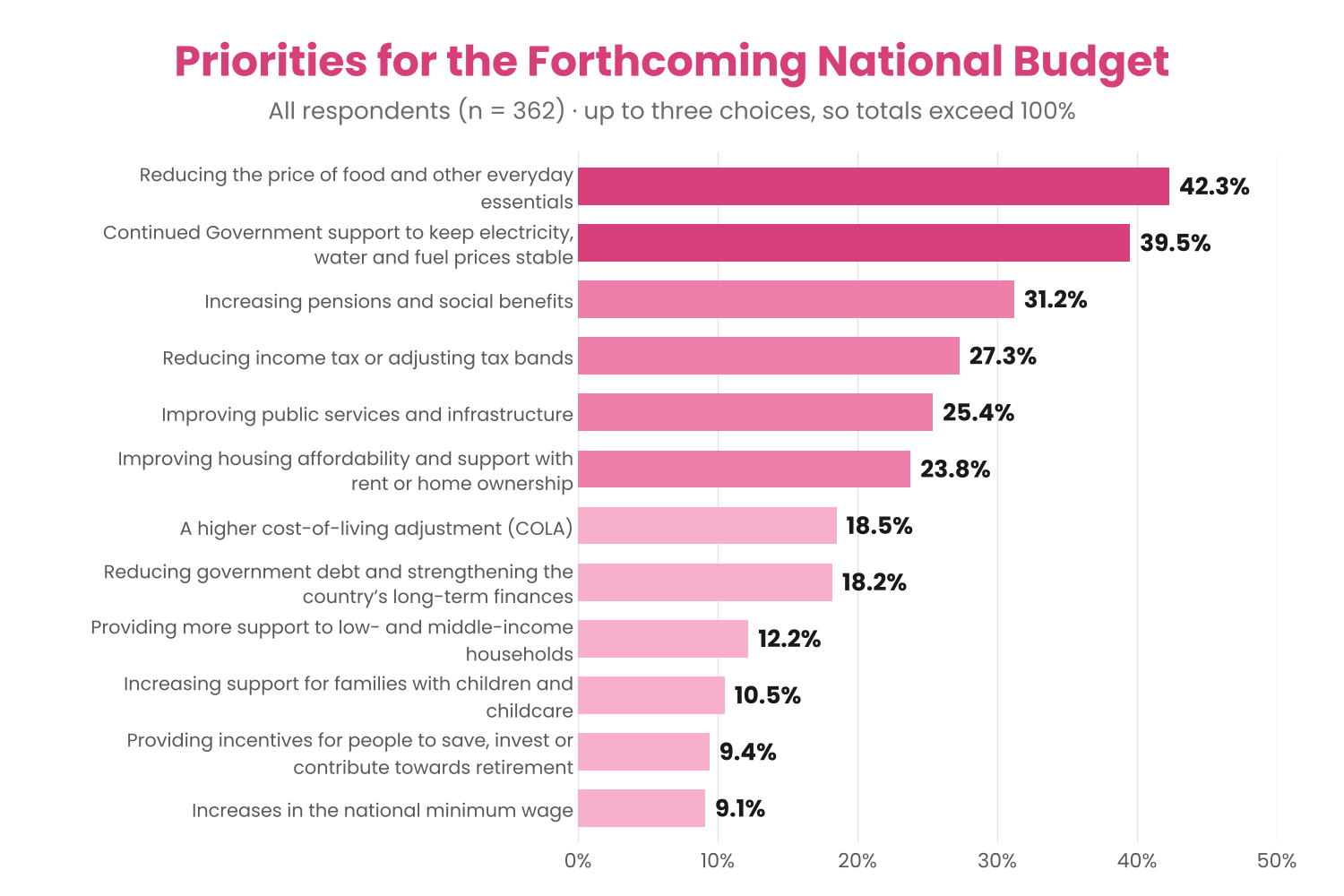
Lower prices for food and everyday essentials (42.3%) and stable electricity, water and fuel prices (39.5%) were the most frequently chosen priorities. They came ahead of higher pensions and social benefits (31.2%) and lower income tax or adjusted tax bands (27.3%). Priorities follow age: 67.1% of those aged 65+ chose higher pensions, while 35.4% of under-45s chose lower income tax or adjusted bands. The full report also sets these priorities against the measures announced in Budget 2027.
Most Households are Managing, but Not All
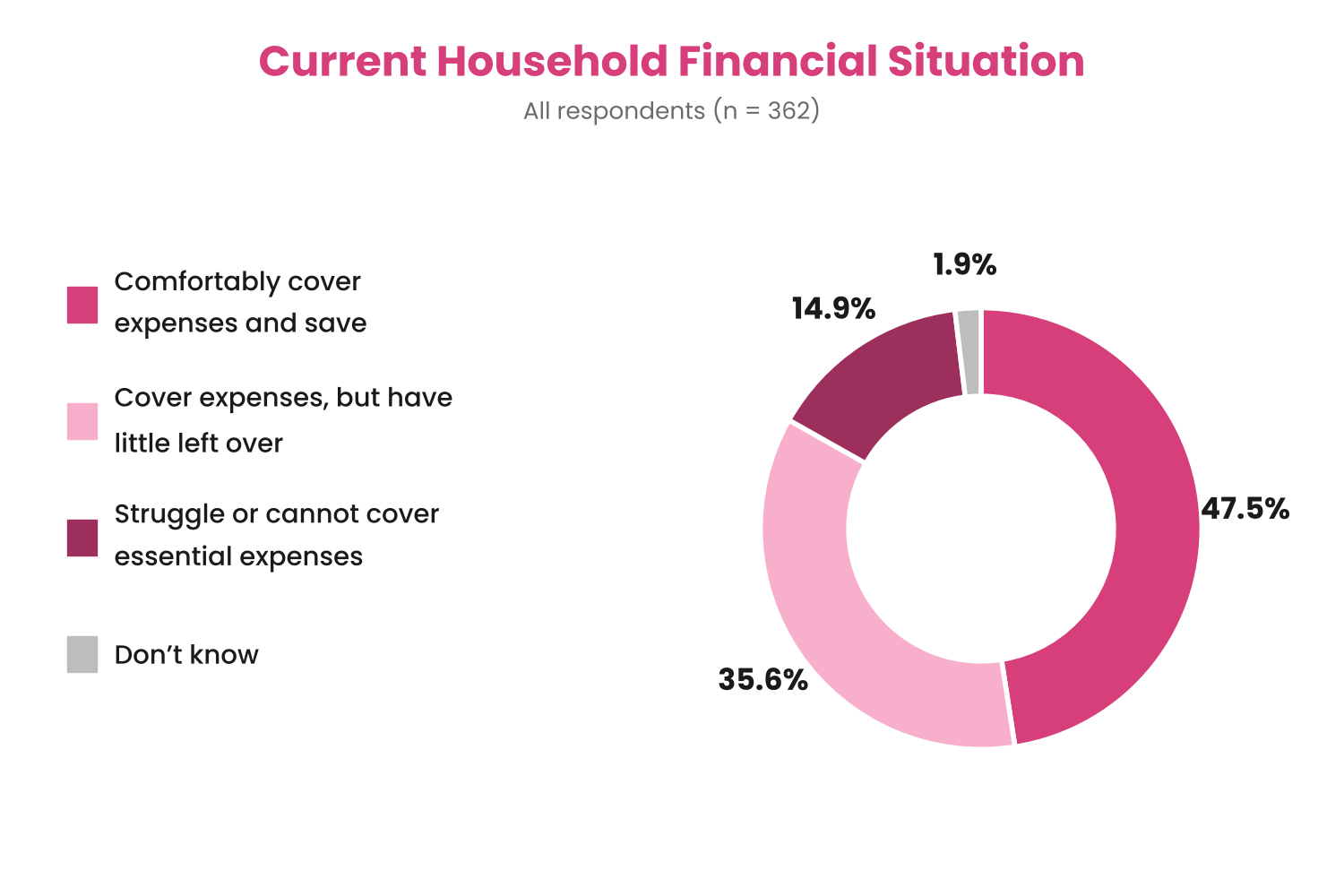
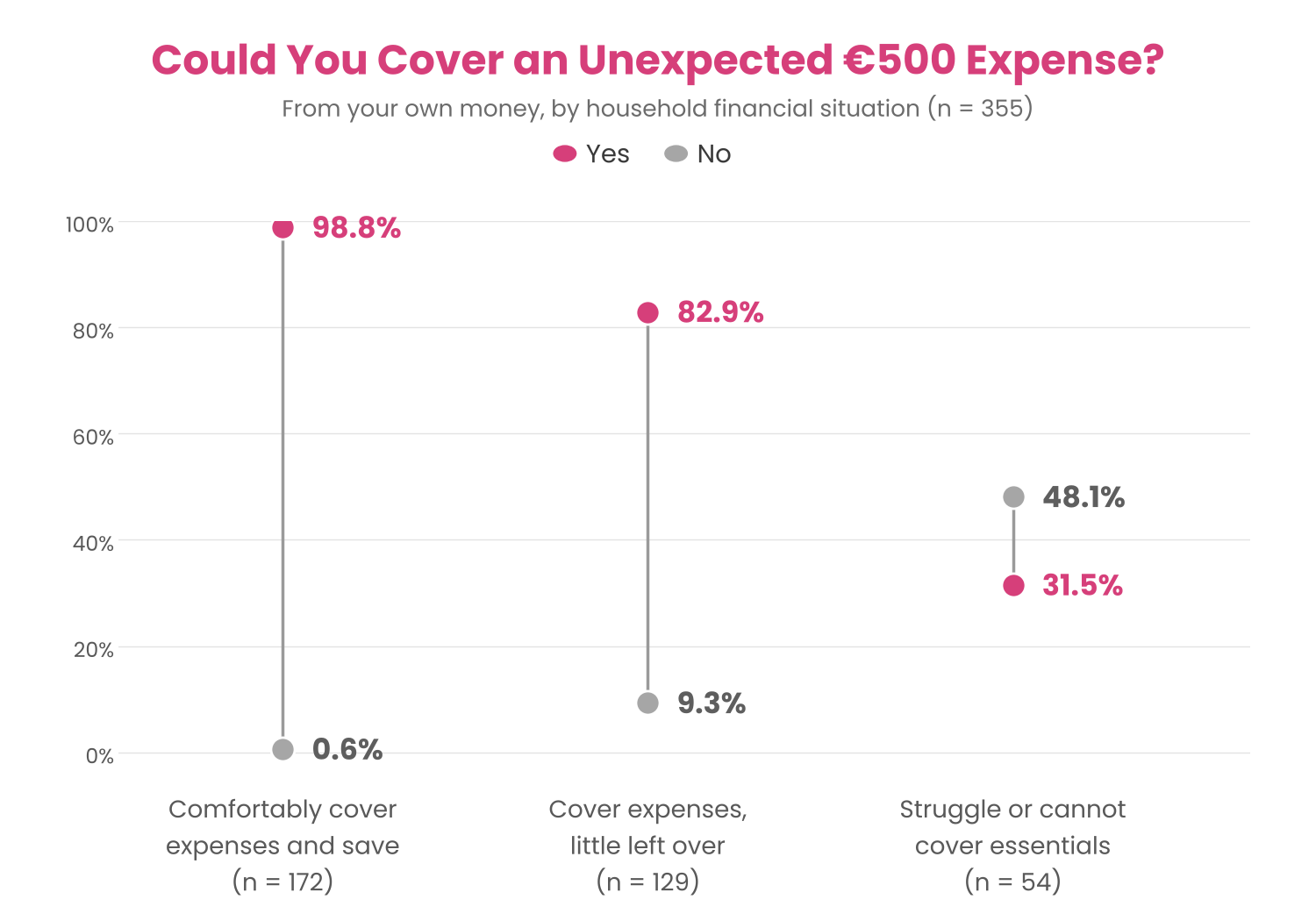
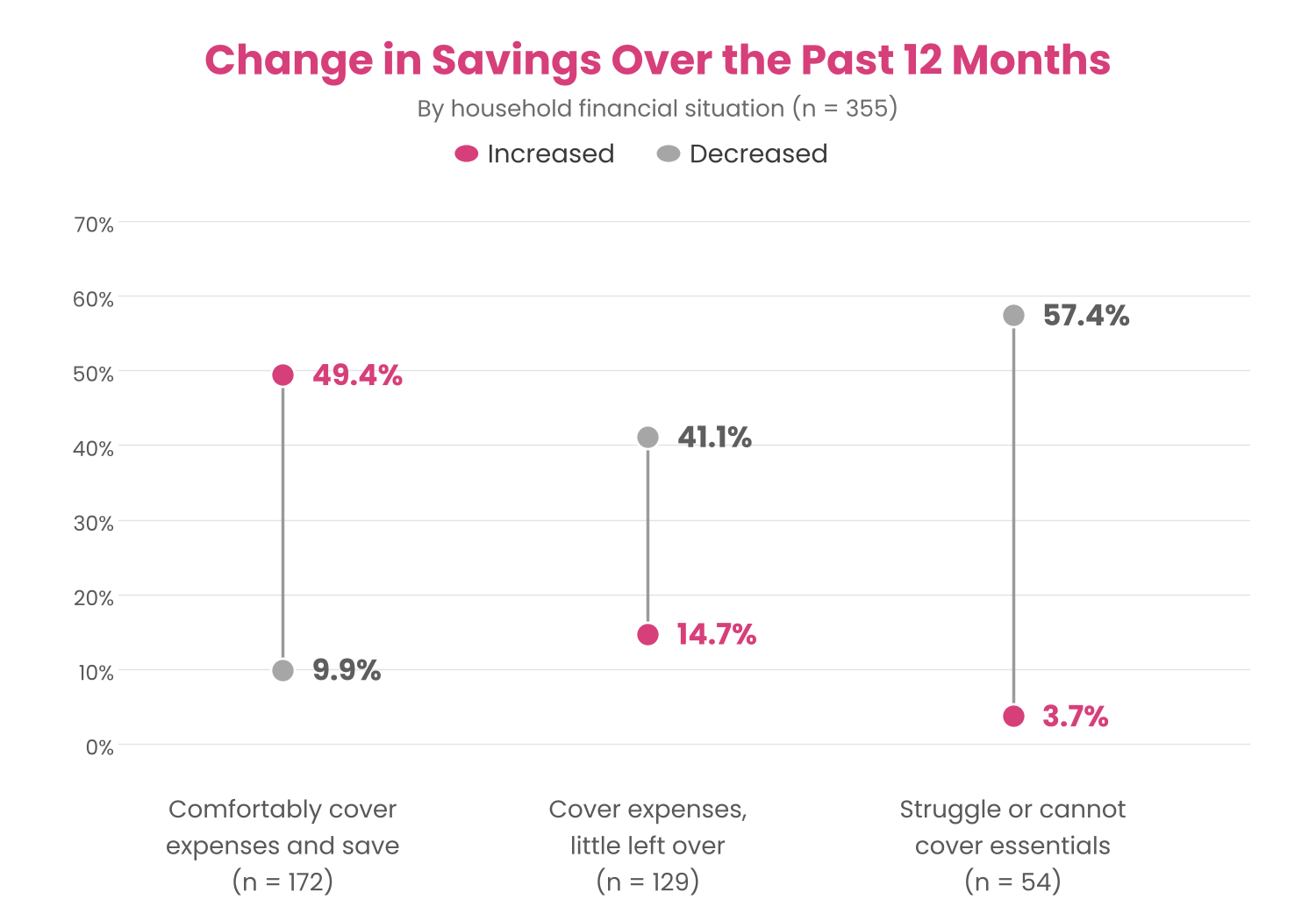
47.5% comfortably cover their expenses and save, 35.6% have little left over, and 14.9% struggle or cannot cover essential expenses. Most (82.0%) could cover an unexpected €500 expense from their own money, but this falls to 31.5% among households that struggle. The past year has also pulled households apart: 49.4% of comfortable households increased their savings, while 57.4% of struggling households saw theirs fall.
Confident Today, Less Certain About Retirement
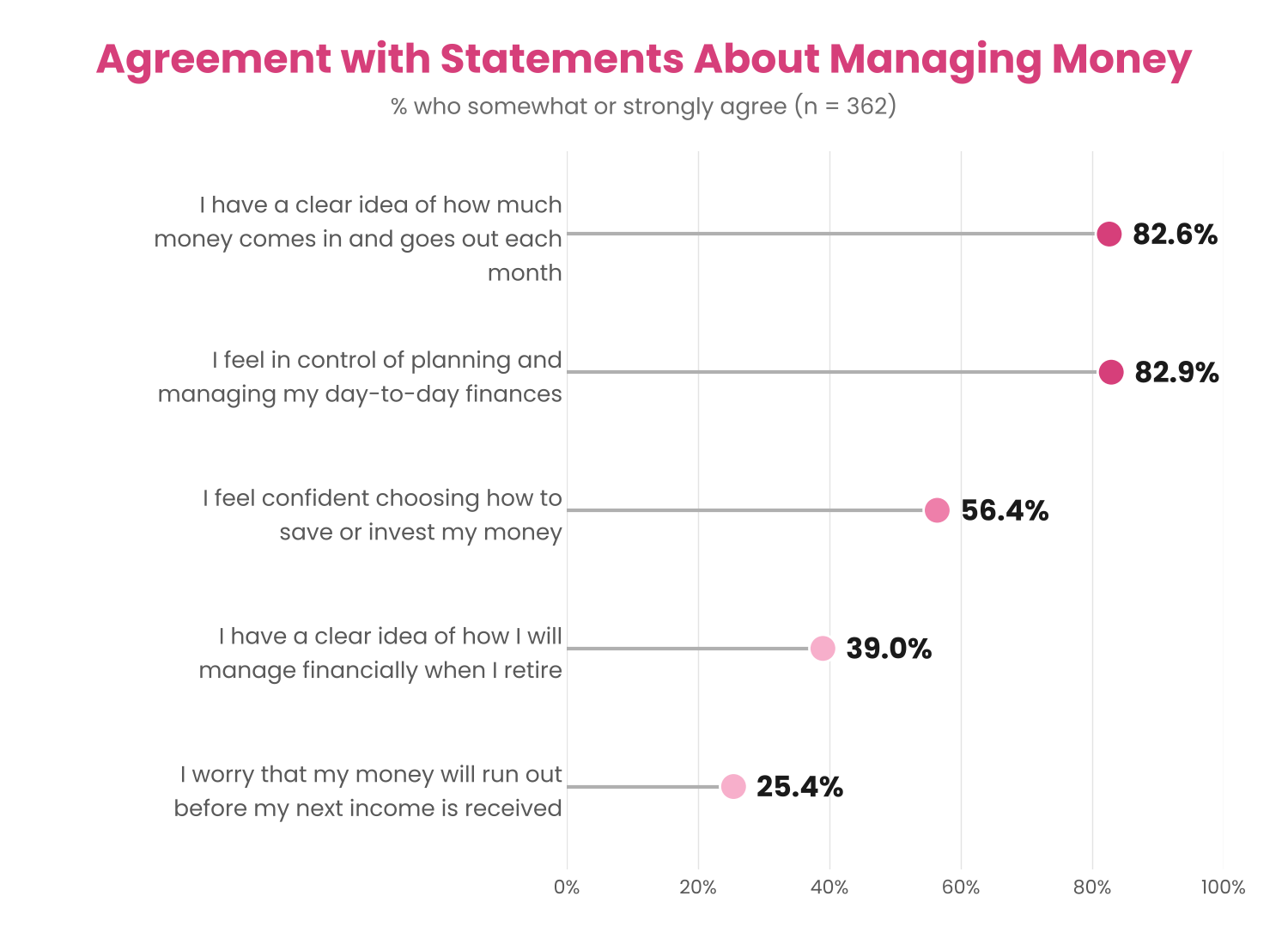
82.9% feel in control of their day-to-day finances, but only 39.0% have a clear idea of how they will manage financially when they retire. Almost half (49.4%) had not heard of any of the national financial capability initiatives we asked about. Even so, 41.1% would be likely to use a free Government service if they needed help with budgeting, debt or financial planning.
What the Data Signals
Concern about the cost of living runs across all groups, while Budget priorities and saving patterns follow the life course. Financial circumstances shape both how people experienced the last Budget and what they want from the next. Confidence in managing money day to day is not matched by clarity about saving, investment and retirement. Results are unweighted, and differences between smaller demographic groups should be read as indicative.