


Research on
Cost of Living & Housing
04/05/2026
Author: Julia
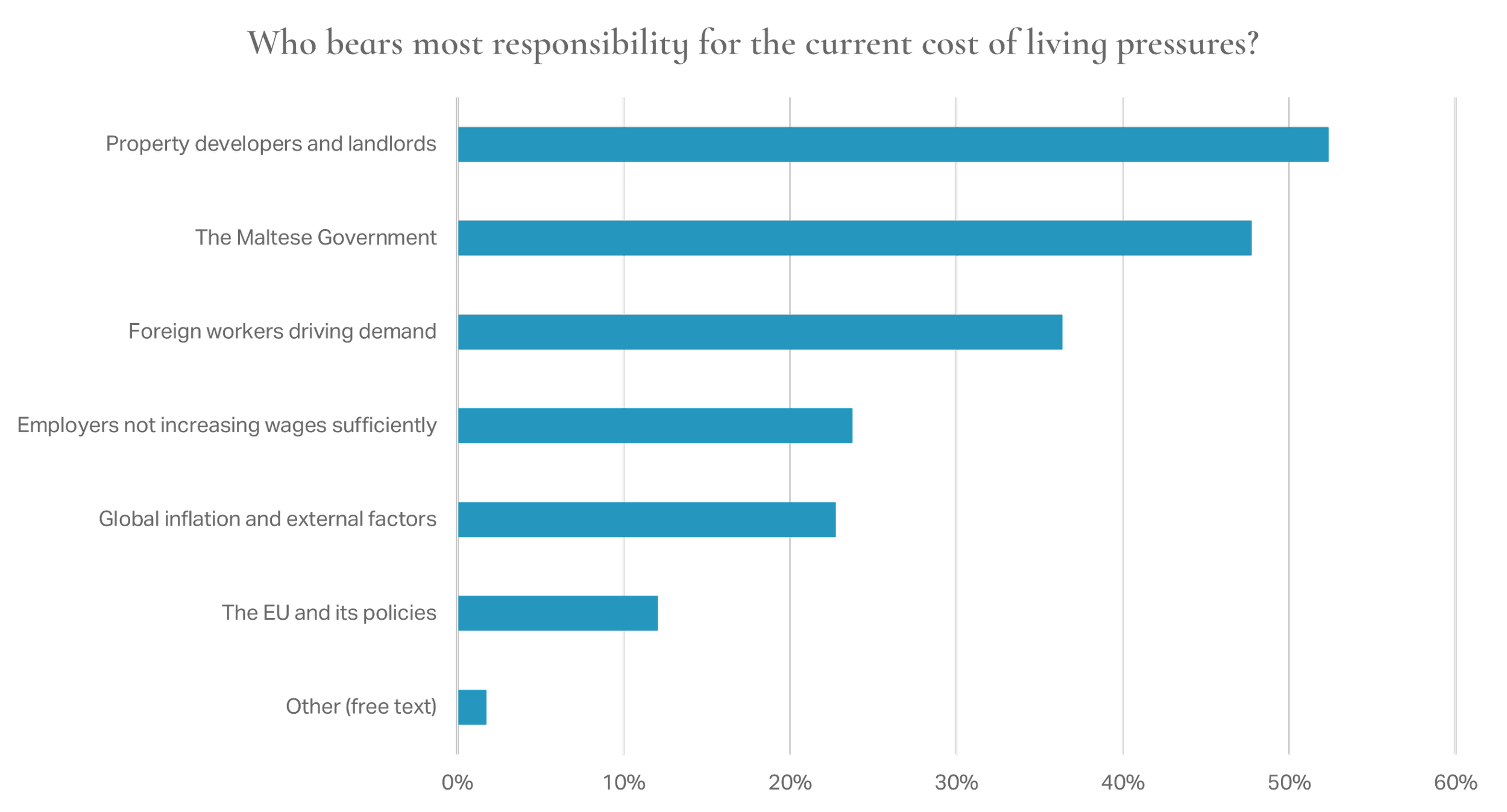
More than a quarter of Maltese adults (27.3%) say they are seriously considering or actively planning to leave the country due to the cost of living. Among 25–34-year-olds, that figure rises to 41.7%.
This finding highlights one of the most critical points captured in MAS’s first wave of independent public opinion surveys, fielded between 1 and 27 April 2026. Based on 300 respondents and weighted to NSO age, gender and regional targets, the survey focuses on two issues dominating everyday life in Malta: the cost of living and housing.
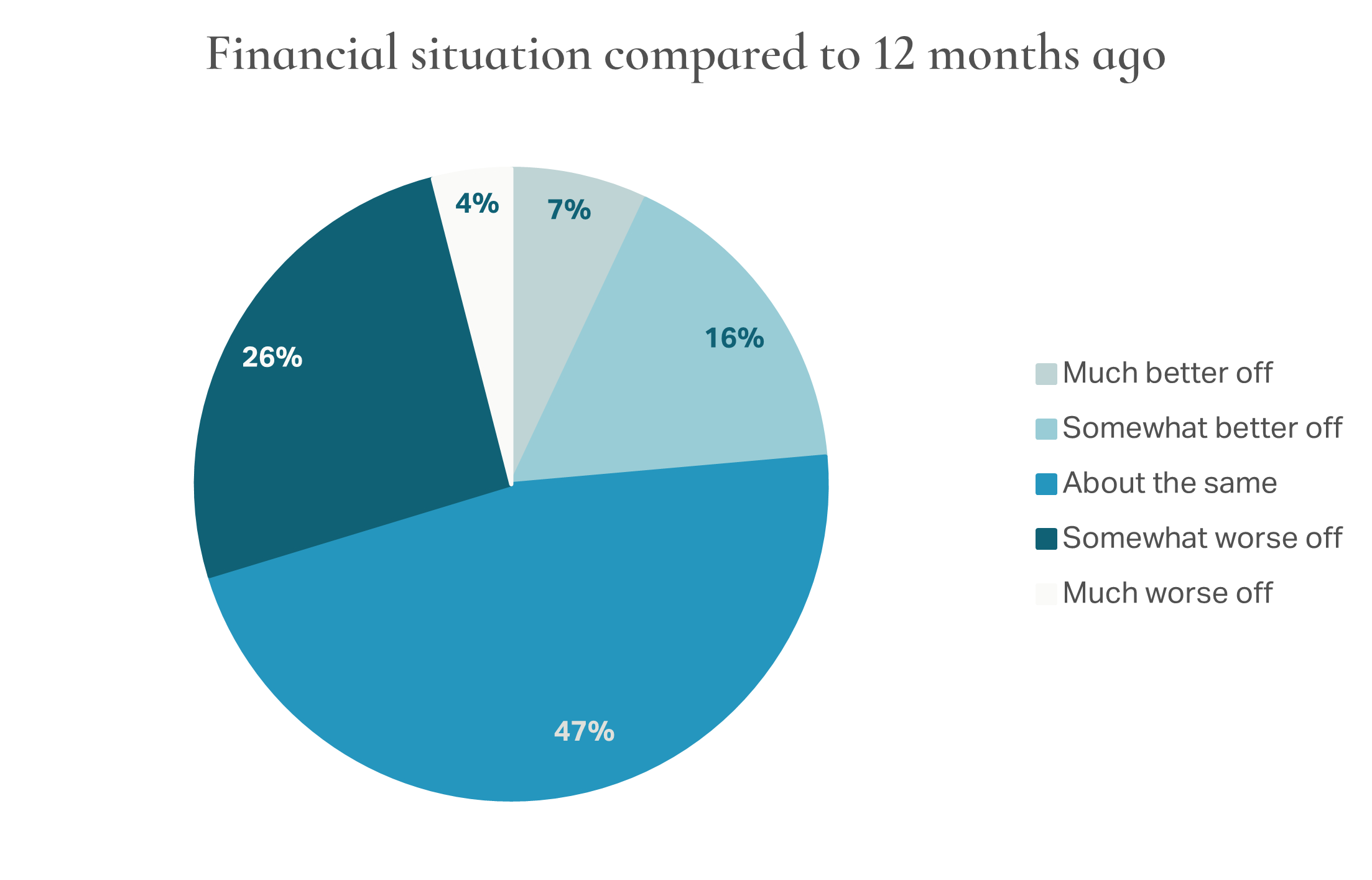
The headline reading is one of pressure rather than crisis. Just under half of respondents (46.7%) say their financial situation is unchanged compared to a year ago, but those reporting being worse off (29.7%) outnumber those better off (23.6%). Looking ahead, concern is widespread as 65% are worried about meeting essential living costs over the next 12 months, with one in four describing themselves as “very concerned.”
Households are already adjusting, with the most common cutbacks being discretionary: eating out (57%), holidays (46.7%) and clothing (45.3%). However, 31.3% report cutting savings or pension contributions — a short-term coping strategy with long-term consequences.
A Population Under Pressure
Housing Dominates the Picture
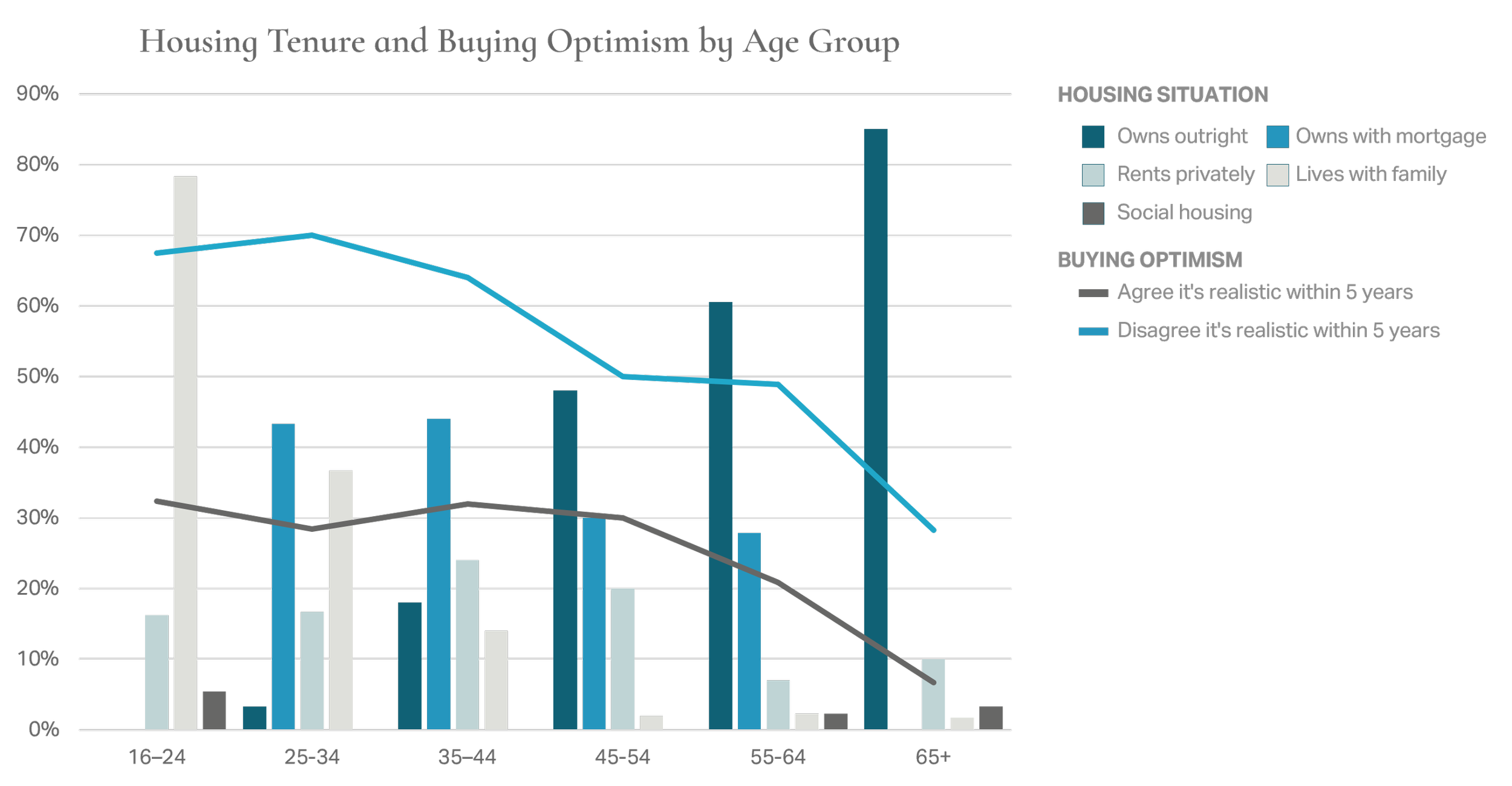
Malta retains one of the highest home-ownership rates in the EU, and our survey reflects this: 62.3% of respondents own their home outright or with a mortgage. But the data also exposes a clear generational divide. 78.4% of 16–24-year-olds still live with parents or family. Among 25–34-year-olds, pessimism peaks with 45% strongly disagreeing that it is realistic for someone their age to buy a property in Malta within the next five years.
The Residential Property Price Index rose year-on-year 6.1% in Q4 2025 (NSO RPPI), and renters in our survey feel the pressure: 60% report spending more than 40% of their monthly household income on rent — well above the 30% threshold typically used to define housing affordability stress
Public Attribution is Domestic
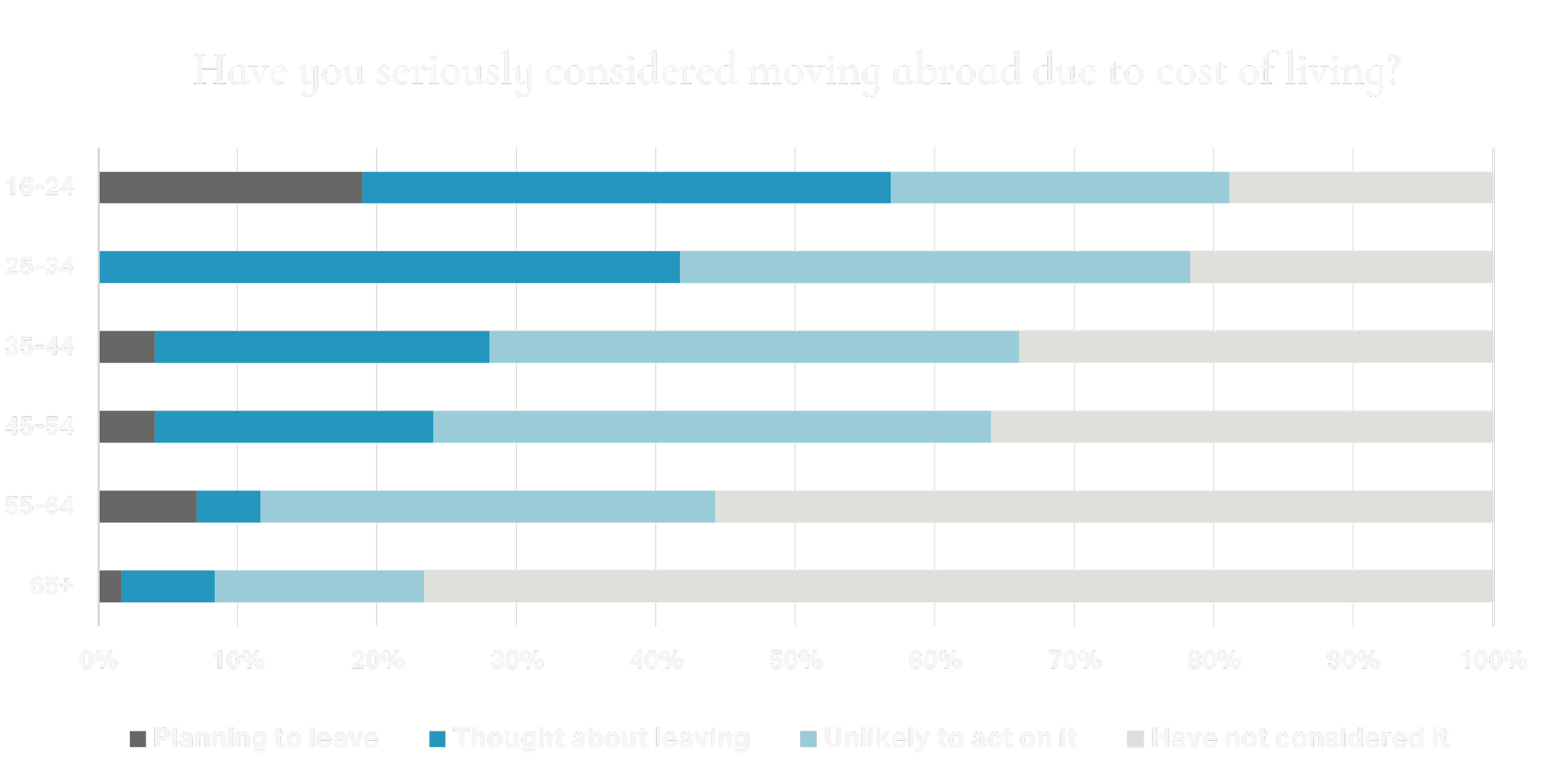
When asked who bears responsibility for rising living costs, respondents primarily point to property developers and landlords (52.3%), followed closely by the Maltese Government (47.7%) and population pressures linked to foreign workers (36.3%). Only 22.7% cite global inflation. In the public mind, businesses and policymakers are being judged against a domestic benchmark, regardless of how much of the underlying pressure may be driven by external factors.
The Brain-Drain Question
Perhaps the most consequential finding from this survey is the potential for outward migration. Overall, 27.3% of respondents are seriously considering or actively planning to leave Malta because of cost-of-living pressures. Among 25–34-year-olds (an age band which represents a key segment of the workforce) this rises to 41.7%. Even though stated intent in surveys often overstates actual migration flows, the concentration of this sentiment within a specific and economically productive age group makes it significant even when discounted. With unemployment at 2.8% (Central Bank of Malta, Q3 2025), the loss of even a modest share of this group would further tighten the local labour market.
What the Data Signals
The picture is of a population coping rather than collapsing, but with pressure concentrated among younger working-age Maltese, particularly around housing access.
Housing affordability, wage growth, and talent retention are not three separate conversations — they sit on top of one another in this dataset. While no single organisation can address these challenges alone, they are relevant to every employer, landlord, retailer and policymaker operating in Malta.